
The Beginning: The Most Dangerous Airport in the World
Picture this — a tiny aircraft, a narrow, sloped runway wedged into the side of a mountain, a wall of rock at one end and a drop into the valley at the other. This is Lukla Airport, widely known as the most dangerous airport in the world. And this is exactly where the story of the Everest Base Camp Trek begins — roughly 30 minutes after taking off from Kathmandu, the moment the wheels touch that narrow strip and the pilot brings the plane to a stop with remarkable skill. That’s the moment you realize this is not going to be an ordinary journey.
In the first phase, we cross this very airport. Once that heart-pounding flight is behind us, the real Everest Base Camp Trek begins. And right after that comes the climb toward Namche Bazaar — genuinely difficult. A steep, relentless uphill trail, thin Himalayan air that leaves you breathless, and altitude climbing step by step, teaching your body an entirely new language — the language of elevation.
Further along this journey, we meet the Sherpa community — their traditions, their culture, their religion, and the warm hospitality they extend to every visitor. This blog is the honest, detailed, real story of that entire journey — from start to finish.
Everest Base Camp Trek at a Glance
| Detail | Information |
| Duration | 12–14 days (Lukla to Lukla), 15–16 days including Kathmandu buffer days |
| Maximum Altitude | 5,545 m (Kala Patthar), 5,364 m (Everest Base Camp) |
| Difficulty | Moderate to Challenging — no technical climbing required, but altitude is a real challenge |
| Best Seasons | March–May (Spring), late September–November (Autumn) |
| Starting/Ending Point | Lukla (flight from Kathmandu or Ramechhap) |
| Accommodation | Teahouses/lodges |
| Trekking Distance | Approximately 130–140 km round trip |
Day-by-Day EBC Trek Itinerary
Day 1: Kathmandu → Lukla → Phakding
An early morning flight takes us from Kathmandu to Lukla (2,860 m). The moment the plane stops on that runway is something you remember for a lifetime. From here, we walk along the Dudh Koshi river through pine forest to Phakding (2,610 m) — 3–4 hours. The first day is deliberately kept short, giving the body time to gently adjust to this new environment.
Day 2: Phakding → Namche Bazaar
This is the first real test for most trekkers. We cross a long suspension bridge over the Dudh Koshi, pass through the Sagarmatha National Park entrance at Monjo, and finally climb a genuinely steep, sustained uphill trail to reach Namche Bazaar (3,440 m). It’s a 5–6 hour walk. Toward the end, if the clouds cooperate, you catch your first distant glimpse of Everest — a moment that stays with you.
Day 3: Acclimatization Day in Namche Bazaar
Not a rest day — an active day of adjusting the body to altitude. A short hike up to the Everest View Hotel (3,880 m) or the villages of Khumjung/Khunde follows the “climb high, sleep low” principle. Namche itself, built into the hillside in the shape of a horseshoe, is a lively town — bakeries, gear shops, a Saturday market, and surprisingly good coffee even at this elevation.
Day 4: Namche → Tengboche
The trail contours along the valley, offering stunning mountain views, before dropping to the river and climbing again through rhododendron forest to Tengboche (3,860 m) — home to the region’s most significant monastery. If the timing aligns with the evening prayer ceremony, it becomes one of the most moving moments of the entire trek.
Day 5: Tengboche → Dingboche
The trees begin to disappear here — the landscape shifts from forest into high alpine terrain. Dingboche (4,410 m) sits in a wide valley at the foot of Ama Dablam. This is where the effects of altitude start to be felt more seriously.
Day 6: Second Acclimatization Day in Dingboche
A hike up Nangkartshang Peak (around 5,000 m) followed by a return to sleep at Dingboche’s lower elevation. This day further prepares the body for the altitude ahead.
Day 7: Dingboche → Lobuche
The terrain turns rocky and stark. Along this stretch lies a memorial site for climbers who lost their lives on Everest and other Himalayan peaks — stone chortens and prayer flags fluttering in the wind, a solemn but quiet section of trail. Lobuche sits at 4,940 m.
Day 8: Lobuche → Gorak Shep → Everest Base Camp
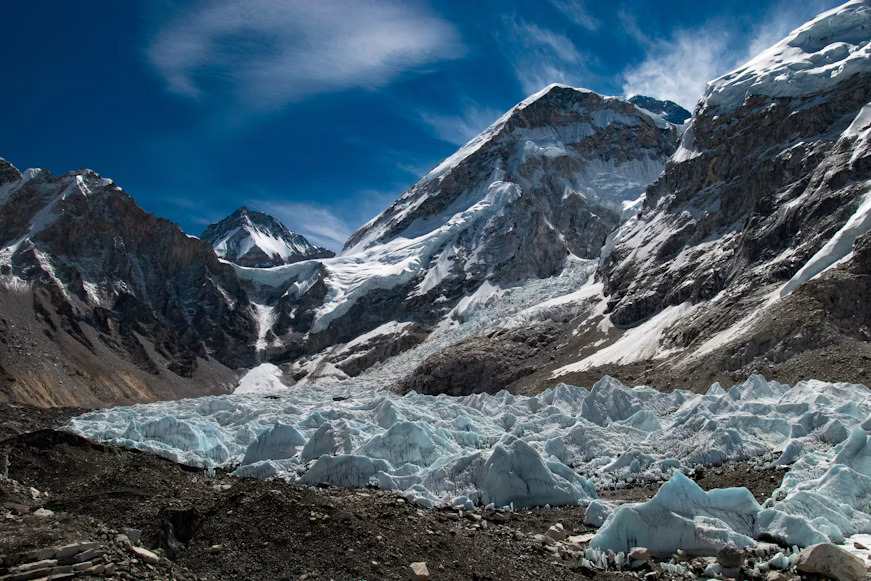
This is the big day. We reach Gorak Shep (5,164 m) by late morning, drop our bags, and continue across the Khumbu Glacier’s moraine to Everest Base Camp itself (5,364 m). You can’t see Everest’s summit directly from Base Camp — that’s Kala Patthar’s job — but standing at the foot of the world’s highest mountain is an unimaginable feeling on its own. We return to Gorak Shep for the night.
Day 9: Kala Patthar Sunrise → Descend Toward Pheriche
In temperatures colder than winter, well before dawn, we climb Kala Patthar (5,545 m) — the highest point of the entire trek. Watching the first light of sunrise hit Everest’s summit is the true peak of the journey. Many trekkers cry; many go completely silent.
Days 10–12: Descend via Namche Back to Lukla
The return route retraces much of the ascent, but faster — the body has adjusted to the altitude by now. This is typically split across two to three days, with another night in Namche along the way.
Day 13: Fly Lukla → Kathmandu
A short flight brings us back to Kathmandu — running water, a real bed, and the feeling of having accomplished something significant.
What Does This Trek Actually Feel Like? (My Experience)
- The thrill of the Lukla flight: Those few minutes before takeoff are the most heart-pounding of the entire trip. But once you witness the skill of the Nepali pilots, that fear slowly turns into excitement.
- The first Himalayan view: At a viewpoint near Namche, if the clouds clear, that first glimpse of Everest is what makes the journey feel real for the first time.
- The Namche vibe: On your first morning in Namche, even tying your shoelaces makes your heart beat faster. The first time my body actually felt the altitude was arriving in Namche. At 3,440 metres, walking too much too fast isn’t a good idea — that’s exactly why acclimatization days are built into the itinerary.
- The first brush with altitude: A headache, unusual fatigue, loss of appetite — these are the ordinary signals altitude sends. Walking slowly and drinking plenty of water is the best response.
- Cold nights: Above Dingboche, teahouse rooms aren’t heated. Temperatures drop well below freezing overnight, and facing that cold is an experience in itself.
- Reaching Base Camp: Hard to put into words — but standing at the foot of the world’s highest mountain, you realize you’re capable of far more than you thought.
- Kala Patthar sunrise: Climbing in the cold, in the dark, breathless with every step, and then watching the first rays of sunlight hit Everest’s summit from that point — that moment is the true gift of the entire journey.
The Sherpa Community, Tradition & Culture
The Everest Base Camp Trek isn’t just a journey through mountains and altitude — it’s also a chance to step into the living culture of the Sherpa community. The Khumbu region has been the Sherpa homeland for centuries, and they’ve kept their Buddhist faith, traditions, and hospitality alive to this day.
- Monasteries and gompas: Centuries-old monasteries like Tengboche, where monks still follow age-old prayer traditions
- Prayer flags and mani walls: Fluttering prayer flags and carved stone mani walls at every pass, bridge, and village entrance
- Hospitality: Small teahouse rooms, but hot dal bhat and a warm welcome
- A deep connection with mountaineering: Sherpas are known worldwide as guides and support for mountaineers — the history of Everest expeditions is incomplete without the Sherpa community
- Daily life: Farming, livestock herding, and trade have shaped life in Khumbu — visible firsthand in every village along the trail
This encounter with Sherpa culture is what makes the EBC Trek a deeper, more distinctive experience than most other treks.
Altitude, Terrain & Difficulty
Altitude
Starting from Lukla (2,860 m) and climbing to Kala Patthar (5,545 m), oxygen levels drop to roughly half of what they are at sea level. This — not distance — is the single biggest factor that makes the EBC Trek genuinely challenging.
Terrain
The trail shifts constantly: sometimes a flat riverside path, sometimes pine and rhododendron forest, sometimes rocky glacial moraine, and sometimes a steep, relentless uphill climb — like the trail up to Namche, where the sustained ascent leaves you breathless.
Difficulty
- 5–7 hours of daily walking on uneven, rocky trails
- Continuous steep ascents and descents
- Freezing cold nights above Dingboche
- Even “rest days” involve active acclimatization hikes
That said, if you can comfortably walk 5–6 hours a day at home, and you’re willing to walk slowly at altitude, the EBC Trek is genuinely achievable for the average healthy adult.
Altitude Sickness (AMS) & Acclimatization
This is the most important section of the entire blog.
- What is AMS?: The body’s response to reduced oxygen levels as elevation increases.
- Symptoms: Headache, nausea, dizziness, fatigue, loss of appetite. Serious symptoms — confusion, breathlessness even at rest, loss of coordination — are signs that immediate descent is required.
- Why acclimatization matters: The acclimatization days built into the itinerary at Namche and Dingboche allow the body to gradually adjust to increasing altitude, following the “climb high, sleep low” principle.
- When to slow down or descend: If symptoms don’t improve with rest, or if they worsen, you should stop ascending immediately — or descend right away. Ignoring symptoms and pushing forward is the single biggest risk on this trek.
Other Essentials
- Drink 3–4 litres of water a day
- Avoid alcohol and sleeping pills at altitude
- Trek with an experienced guide who can monitor daily oxygen saturation
EBC Trek Cost Breakdown
- Kathmandu expenses: Hotel, meals, local transport
- Flights: Kathmandu/Ramechhap–Lukla (round trip)
- Guide/Porter: Fees for an experienced, licensed guide and porter
- Permits: Sagarmatha National Park + local Khumbu permit
- Accommodation: Teahouse stays throughout the trek
- Food: Three meals a day, for the full trek duration
- Insurance: Travel insurance covering high-altitude trekking and helicopter evacuation
- Gear: Down jacket, sleeping bag, boots, etc. (if you need to buy your own)
- Miscellaneous: Wi-Fi, charging, hot showers, snacks — all progressively more expensive with altitude
What’s included and excluded varies by package, so it’s worth asking for a clear breakdown before booking.
Can a Beginner Do the EBC Trek?
Yes — with proper preparation. No technical climbing skill is required, but you’ll need:
- Good physical fitness (built up over several months beforehand)
- A mindset that takes altitude seriously
- The patience to walk slowly
- Flexibility to accept weather and schedule delays
With an experienced guide, a well-designed itinerary, and adequate acclimatization, many beginner trekkers have successfully completed the EBC Trek.
What to Pack for Everest Base Camp
- Down jacket
- Trekking shoes (well broken-in)
- Thermal layers (base layer + mid layer)
- Waterproof/windproof jacket
- Gloves (insulated + liner)
- Warm hat, sun hat, buff
- Sleeping bag (-10°C to -15°C rated)
- Sunglasses (UV protection)
- Sunscreen and lip balm
- Water bottle + purification tablets
- First-aid kit (including personal medication)
- Headlamp + spare batteries
- Power bank
- Trekking poles
Best Time for the EBC Trek
- Spring (March–May): Rhododendrons in bloom, stable weather, the most popular season.
- Autumn (late September–November): The clearest skies, excellent mountain visibility.
- Winter (December–February): Quiet trails, but bitterly cold, with some teahouses closing.
- Monsoon (June–August): Heavy rain, poor visibility, generally not recommended.
Practical Tips
- What if the Lukla flight is delayed?: Build buffer days into your itinerary; in persistent bad weather, helicopter transfer is sometimes an option.
- How much cash should I carry?: There are no ATMs beyond Lukla, so carry enough cash from Kathmandu.
- Internet/Charging?: Usually available at teahouses for a fee, getting more expensive with altitude.
- What are teahouses like?: Simple rooms, a shared dining hall, and a warm atmosphere.
- Shower/Toilet situation?: Hot showers are available lower down, rare and expensive higher up. Toilets are mostly shared.
- Drinking water?: Use boiled or filtered water, and cut down on plastic bottle use.
- Solo vs. Guide?: Current regulations require a licensed guide in the Khumbu region — and it’s the safer choice regardless.
EBC Trek: Pros & Cons
✔ Incredible mountain views
✔ Direct encounter with Sherpa culture
✔ A genuine once-in-a-lifetime experience
✘ Relatively expensive
✘ Altitude challenge
✘ Long walking days
✘ Unpredictable weather
Conclusion
Reaching Everest Base Camp doesn’t mean climbing Everest — it means getting close enough to Everest to realize you’re capable of far more than you ever thought. A journey that begins on that dangerous Lukla runway, continues through steep uphill trails and freezing nights, and ends with a sunrise over Everest from Kala Patthar — together, these moments create a story you’ll be telling for the rest of your life.
Ready to Trek to Everest Base Camp?
You now have the full picture: the journey, the altitude, the culture, the cost, and what it really feels like. The only step left is deciding when to go.
Speak Directly With Our Himalayan Trekking Expert
This Everest Base Camp Trek is operated by Abhiwadan Expedition and Holidays, under the leadership of Umesh Gupta. For Himalayan trekking packages across Nepal and India, Umesh Gupta personally supports every enquiry from first contact through to booking — helping with route selection, permits, acclimatization planning, and every detail of the journey.
Contact: Umesh Gupta — Himalayan Trekking Specialist
Email: info@abhiwadantrip.com
Phone/WhatsApp: [9851181005]
Website: https://abhiwadantrip.com/
For any support or information, please feel free to get in touch.
Talk to Umesh Gupta — Your Himalayan Trek Specialist → Enquire Now
Nepal Treks | India Treks | Everest Base Camp | Custom & Private Itineraries

Bądź na bieżąco